Common Types of Hair Loss
Female Pattern Hair Thinning
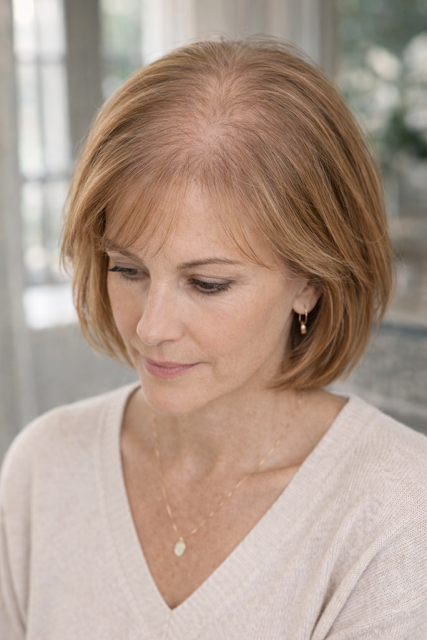
One of the most common forms of hair loss in women. Instead of a receding hairline, many women notice a gradual reduction in hair density, particularly around the crown or parting.
Alopecia
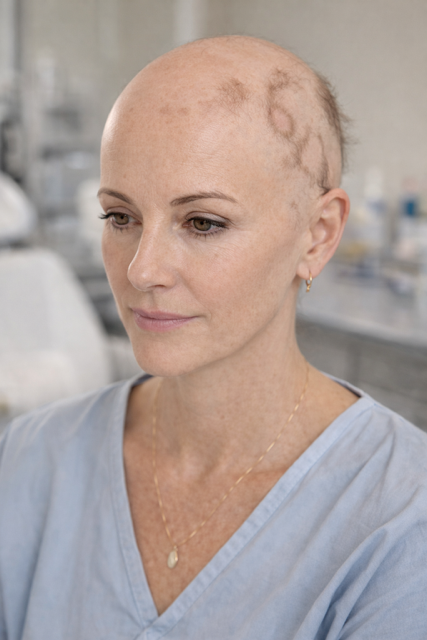
Alopecia is an autoimmune condition where the body’s immune system affects the hair follicles. This may result in patchy hair loss or more widespread thinning depending on the type.
Hormonal Hair Loss
Hormonal changes during pregnancy, menopause or thyroid imbalance can sometimes trigger hair thinning.
Stress Related Hair Loss
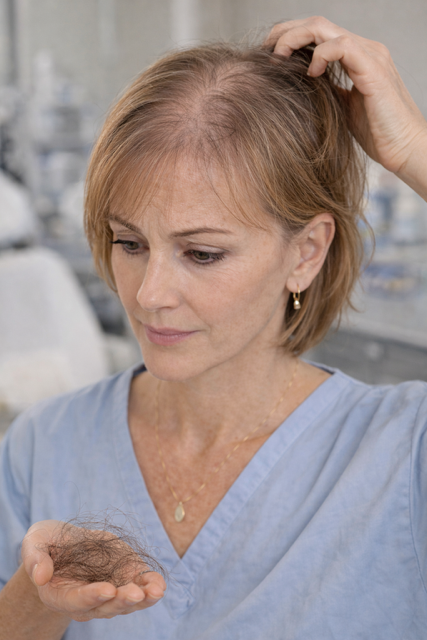
Periods of significant physical or emotional stress may cause a temporary condition called telogen effluvium, where hair sheds more quickly than normal.
Hair Loss from Medical Treatment
Certain medical treatments, particularly chemotherapy, may cause temporary hair loss as medications affect rapidly growing cells such as hair follicles.
Hair Loss & Chemotherapy
For women undergoing chemotherapy, hair loss can often be one of the most emotionally challenging parts of treatment.
Chemotherapy medications target rapidly dividing cells in the body. While this helps destroy cancer cells, it can also affect hair follicles.
Hair loss may affect:
- Scalp hair
- Eyebrows and eyelashes
- Body hair
For many women, this stage of treatment can feel particularly difficult because hair is closely connected to identity and confidence.
Fortunately, there are supportive solutions available that allow women to maintain a natural appearance during treatment and recovery.
The Emotional Impact of Hair Loss
Hair loss is often described as a cosmetic concern, but for many women it can have a much deeper emotional impact.
Common feelings include:
- Reduced confidence
- Self-consciousness
- Anxiety about appearance
- Changes in personal identity
Because of this, any solution should focus not only on restoring hair but also on helping individuals feel comfortable and confident again.